
The Best Infomercials of All Time: 25 Classics That Made History
Some infomercials are forgotten the night they air. Others move millions of units, mint catchphrases that outlive the products, and become permanent fixtures of late-night television. Below is our ranked list of the 25 most iconic infomercials ever aired, with the products, the pitchmen, and the years that made each one a classic. We picked them based on cultural footprint, reported units sold, longevity on the air, and how often the catchphrase is still quoted today.

What Makes an Infomercial a Classic
A classic infomercial is one that sold the product, sold the pitchman, and sold a piece of the format itself. The 25 spots on this list all met three tests: they ran for years rather than months, they were widely parodied or quoted in mainstream culture, and they generated reported sales high enough to be cited in business press. For the rules of the format these spots all worked inside, see our pillar guide to what an infomercial is.
The 25 Best Infomercials of All Time
1. Ginsu Knives (late 1970s)
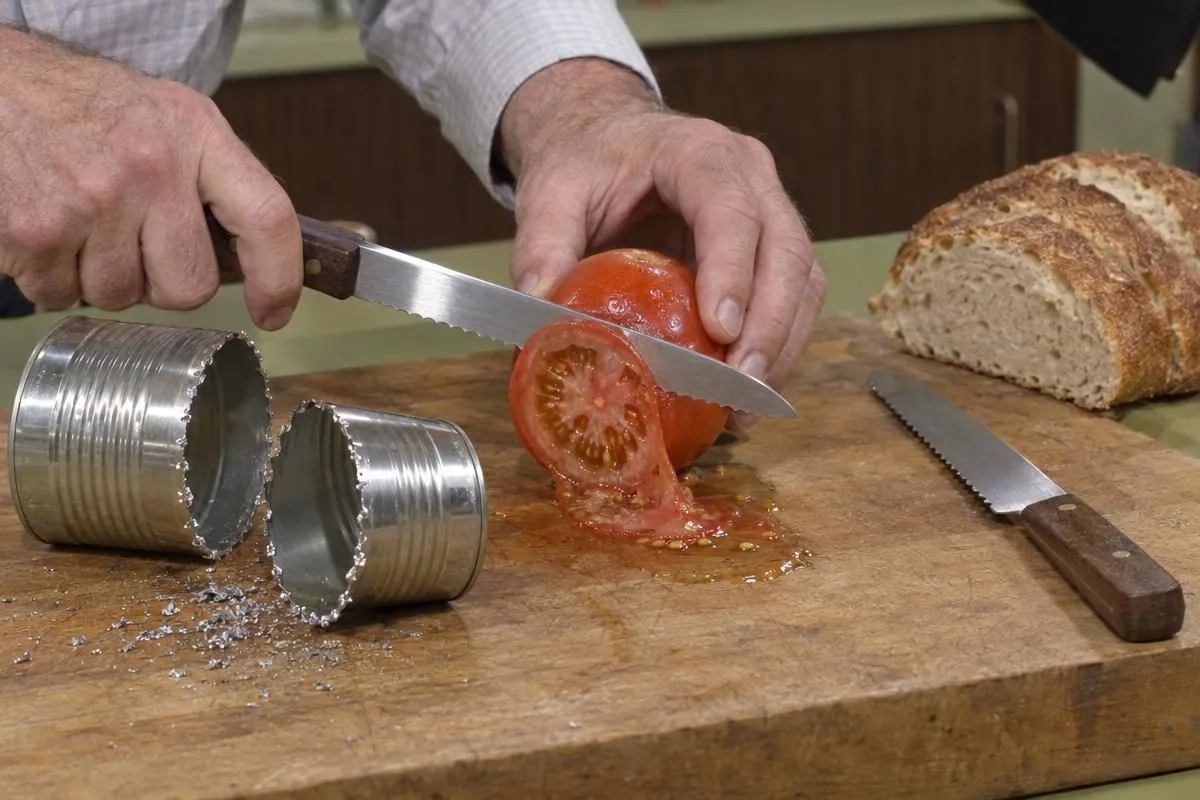
The Ginsu spot is the original “But wait, there’s more!” template, period. Marketers Barry Becher and Ed Valenti launched the campaign in 1978, and over the next several years the spot reportedly sold somewhere between two and three million sets of knives. It introduced almost every convention later infomercials would use: the over-the-top demo (slicing a tin can, then a tomato), the rapid stack of free bonuses, and the closing 800 number. Without Ginsu, this list does not exist.
2. Ronco Pocket Fisherman (1972)
Ron Popeil launched the Pocket Fisherman in 1972, and it became a perennial late-night staple for the next 30 years. A collapsible rod-and-reel that fit in a glove compartment, it was one of the first Popeil products to use the full long-form pitch structure that he and his father Samuel had been refining for years. For more on the man behind it, see our profile of famous infomercial pitchmen.
3. Ronco Showtime Rotisserie and BBQ (late 1990s)
The Showtime Rotisserie debuted in the late 1990s and gave the world the phrase “Set it and forget it!” Popeil personally pitched it for years, and it reportedly sold more than seven million units in the United States. It is the platonic ideal of an infomercial product: a real countertop oven, a clear demo, a catchphrase that escaped the medium. We dig into the catchphrase itself in our list of iconic infomercial catchphrases.
4. ThighMaster (1991)
Suzanne Somers fronted the ThighMaster campaign starting in 1991. The product, a spring-loaded resistance device, reportedly sold more than 10 million units in its first decade. Somers’s calm, athletic demo on a sun-lit set was the antithesis of the screaming kitchen pitch, and it opened the door for celebrity-fronted DRTV that would dominate the next 20 years.
5. George Foreman Lean Mean Grilling Machine (1994)
Salton launched the George Foreman Grill in 1994, and Foreman’s endorsement turned a slanted electric griddle into one of the best-selling kitchen products in history. Reported worldwide sales have crossed 100 million units, and Foreman himself reportedly earned hundreds of millions of dollars in royalties before Salton bought out his name rights. By almost any measure, this is the most successful infomercial product ever made.
6. Total Gym (Chuck Norris and Christie Brinkley)
The Total Gym infomercial, fronted by Chuck Norris and Christie Brinkley, has been on the air in some form since the mid-1990s. The premise was simple: an inclined sliding bench used your own bodyweight for resistance, and two impossibly fit celebrities demonstrated it without breaking a sweat. The campaign ran for two decades and is one of the longest continuous DRTV runs in the fitness category.
7. Bowflex (1980s through 2000s)
Bowflex launched in the 1980s as the Bowflex 2000X and exploded into a household name with the Power Pro and Ultimate machines in the 1990s and 2000s. Nautilus, the parent company, reportedly sold more than $300 million worth of units a year at the campaign’s peak. The “Bowflex Body” before-and-after spots are some of the most-aired fitness infomercials of all time.
8. Tony Robbins Personal Power (1988)
Tony Robbins’s Personal Power infomercial first aired in 1988 and ran for years. It sold a cassette program, a worldview, and ultimately the entire modern self-help industry. Personal Power proved that intangible products could move on television if the on-camera presence was strong enough, and it is the reason every Master Class and self-improvement spot you see today exists.
9. Proactiv (1995)
Dermatologists Katie Rodan and Kathy Fields launched Proactiv in 1995, and Guthy-Renker turned it into one of the most successful DRTV campaigns of all time. Celebrity testimonials from Judith Light, Vanessa Williams, Jessica Simpson, Justin Bieber, and many others kept the spots fresh for more than 20 years. Proactiv reportedly generated more than $1 billion in annual sales at its peak.
10. Snuggie (2008)
Allstar Marketing Group launched the Snuggie in 2008, and within two years it had reportedly sold more than 30 million units in the United States. The product was hilarious, the spot was earnest, and the combination became a cultural moment that produced costume parties, parody ads, and a generation of late-night jokes. It is the most successful single-product infomercial of the 2000s.
11. OxiClean with Billy Mays
Billy Mays became the face of OxiClean in the early 2000s, and the campaign turned a generic stain remover into one of the most recognizable cleaning brands in America. Church and Dwight bought the brand from Orange Glo International in 2006 in a deal reportedly worth more than $300 million, much of it owed to Mays’s on-camera work.
12. ShamWow (2006 to 2007)
Vince Offer’s ShamWow spot, which began airing in 2006 to 2007, sold a German-made shammy cloth at a rate that surprised even its distributors. “You’ll be saying wow every time!” became one of the most quoted lines in late-2000s television. It is also one of the spots that pulled DRTV into the early viral-video era, where remixes mattered as much as the original ad buys.
13. Slap Chop
Vince Offer’s follow-up, the Slap Chop, was released a couple of years later and became, if anything, more culturally famous than the ShamWow. A YouTube remix titled “Slap Chop Rap” racked up tens of millions of views and arguably sold more units than the spot itself. The Slap Chop is the moment when infomercials and internet memes officially merged.
14. The Clapper (1985)
Joseph Enterprises launched The Clapper in 1985, with a jingle (“Clap on! Clap off!”) that has outlived the product’s relevance by 40 years. The Clapper is one of the few infomercials whose audio alone is instantly identifiable, and it remains in print and in catalogs today.
15. Hair Club for Men (1980s)
Hair Club for Men founder Sy Sperling delivered one of the single most-quoted lines in advertising history: “I’m not only the Hair Club president, but I’m also a client.” Sperling’s calm, paternal pitch (and the before-and-after photos behind him) ran for decades and made the brand synonymous with the entire hair-restoration category.
16. Tae Bo (mid-1990s)
Billy Blanks’s Tae Bo infomercial blew up in 1998 and 1999 and reportedly sold more than 1.5 million video tapes in its first year. Tae Bo did not invent home fitness videos, but it was the first to combine a martial-arts edge, a charismatic instructor, and a full-on group-class atmosphere on screen. It set the template for everything that came after, including P90X.
17. P90X (2005)
Tony Horton and Beachbody launched P90X in 2005, and the program reportedly went on to generate more than four billion dollars in cumulative sales for the company. The 90-day “muscle confusion” structure, the ripped before-and-after photos, and Horton’s friendly drill-sergeant persona made P90X the defining home-fitness infomercial of the 2000s and 2010s.
18. Insanity Workout (2009)
Beachbody followed P90X with Insanity, fronted by Shaun T, in 2009. Insanity inverted the P90X formula by stripping out the equipment and leaning entirely on max-interval bodyweight training. The spot ran for the better part of a decade and made Shaun T one of the most recognizable fitness pitchmen of his generation.
19. Pet Rock (1975)
Gary Dahl’s Pet Rock predates the modern long-form infomercial, but it lived in the same direct-response, novelty-product universe and was promoted heavily through television and print. Dahl reportedly sold more than 1.5 million Pet Rocks at $3.95 each in the 1975 holiday season. It is the patron saint of every “this is silly but I want one” pitch that came after it.
20. NordicTrack (1980s and 1990s)
NordicTrack’s cross-country ski machine ran some of the most-aired fitness infomercials of the late 1980s and early 1990s. Founded in 1975 and pushed nationwide through DRTV in the following decade, NordicTrack peaked in the mid-1990s and reportedly sold more than $400 million in units a year before the brand changed hands. The classic NordicTrack spot is one of the canonical “your living room can be a gym” infomercials.
21. The Magic Bullet (2003)
Homeland Housewares launched the Magic Bullet in 2003 with a faux dinner-party infomercial that became one of the most rewatched DRTV spots ever made. Mick and Mimi, the hosts, and the rotating cast of breakfast guests turned a small personal blender into a cultural in-joke. The spot ran for more than a decade and pushed the product into tens of millions of households.
22. NutriBullet (2012)
The NutriBullet, also from Homeland Housewares founder Capital Brands, launched in 2012 and used a longer, more health-focused infomercial built around David Wolfe and a panel of nutrition spokespeople. The NutriBullet line reportedly generated more than $250 million in sales in its first three years and became the dominant personal blender of the 2010s.
23. Ginsu 2000 and Knife Successors
The original Ginsu spawned dozens of successor knife infomercials, including the Ginsu 2000, the Miracle Blade, and the Forever Sharp. Each one borrowed Ginsu’s “slice through a can, then a tomato” demo and added new bonuses. The Miracle Blade III alone reportedly sold more than 10 million sets at the campaign’s peak. Together, the knife category is one of the longest-running DRTV genres ever.
24. Flex Seal (2011)
Phil Swift launched Flex Seal in 2011 and built a cinematic universe of products around it: Flex Tape, Flex Glue, Flex Paste, and our personal favorite, Flex Shot. Swift’s “That’s a lot of damage!” became one of the defining infomercial catchphrases of the 2010s, and the spots reportedly drove more than $1 billion in cumulative sales. He is the closest thing the streaming era has produced to a true heir of Billy Mays.
25. Time-Life Music Compilations
The Time-Life Sounds of the Seventies, Sounds of the Eighties, and Classic Rock and Roll compilation infomercials ran for decades and quietly sold tens of millions of CD and tape sets. The format was simple: a montage of recognizable songs, a stack of free bonus discs, and a closing 800 number. Time-Life proved that nostalgia, packaged correctly, was the single most reliable category in DRTV.
What These Classics Have in Common
Run all 25 of these spots back to back and the same ingredients show up in every one:
- A real, ugly little problem. Stained shirt, flabby thigh, dull knife, leaky pipe. The product is the cure.
- A physical demonstration. Cut the can, slice the tomato, lift the bowling ball, blend the smoothie on camera.
- Urgency. “Call in the next 20 minutes.” The clock is always ticking.
- Social proof. Customer testimonials, before-and-after photos, celebrity endorsements, sometimes all three.
- A low entry price. Three easy payments of $19.95. The product feels like a no-brainer.
- “But wait, there’s more!” A stack of free bonuses that doubles the perceived value before the price is named.
Every classic on this list checks all six boxes. The exceptions, like Tony Robbins and Time-Life, simply substitute an emotional outcome (success, nostalgia) for the physical demo. The pattern is unmistakable. For our take on whether the products actually deliver, read do As Seen On TV products work.
The Modern Era of DRTV
Modern long-form direct response has shifted from kitchen gadgets to services and supplements, but the structure is exactly the same. For current examples of how the format is being run today, see our reviews of the Shark Stratos infomercial, the Omega XL infomercial, the Balance of Nature infomercial, and the LifeLock by Norton infomercial. Each of those spots uses the same problem, demonstration, urgency, social proof, and bonus stack that Ginsu pioneered in 1978.
What Came Before Infomercials
The 28-minute-and-30-second long-form infomercial as we know it did not exist before 1984. That year the FCC eliminated the limit on commercial time per hour for television stations, and within months entrepreneurs realized they could buy entire half-hour blocks of late-night airtime cheaply and fill them with a long pitch. By 1988 the infomercial was a billion-dollar industry. For more on the products and personalities that defined that first decade, see our roundup of 80s infomercials, and for the personalities who fronted these classic spots see our profile of famous infomercial pitchmen.
Frequently Asked Questions
- What is the best-selling infomercial product of all time?
The George Foreman Grill is the most widely cited answer, with reported worldwide sales of more than 100 million units since 1994. The Snuggie is the second most commonly cited, with more than 30 million units sold by 2010. Both are reasonable answers depending on whether you count by units or by category dominance. - What was the first nationwide infomercial?
The 1984 FCC deregulation of commercial time limits is what made the 28:30 long-form infomercial possible, and the first widely cited nationwide infomercials came shortly afterward. Ron Popeil and Ronco were running long-form pitches almost immediately, and within two years a full DRTV industry was running across late-night cable. - Who is the most famous infomercial host?
Billy Mays, Ron Popeil, and Tony Robbins are the three most commonly named. Mays is the most recognizable face from the 2000s, Popeil is the architect of the modern format from the 1960s through the 2010s, and Robbins is the most successful in dollar terms. Reasonable people pick different ones. - What does DRTV stand for?
DRTV stands for direct-response television. It is the umbrella term for any television advertising that asks the viewer to take an immediate action (call, text, visit a URL) rather than building general brand awareness. Both 30-second short-form spots and 28:30 long-form infomercials fall under the DRTV banner. - Are classic infomercial products still sold?
Yes. The George Foreman Grill, the Snuggie, OxiClean, Bowflex, Total Gym, the Magic Bullet, the NutriBullet, P90X, and Flex Seal are all still on the market in 2026. Many of them are now sold primarily through Amazon, Walmart, and the brand’s own websites rather than late-night television. - What was the first product Ron Popeil sold on TV?
Ron Popeil’s first major television product was the Chop-O-Matic, sold in the late 1950s and early 1960s. He went on to launch the Veg-O-Matic, the Pocket Fisherman, and dozens of other Ronco products in the decades that followed. - Why did infomercials become so popular in the 80s and 90s?
The 1984 FCC deregulation made cheap half-hour airtime available, cable television was expanding rapidly, and toll-free 800 numbers plus credit cards made impulse purchasing trivially easy. Those three factors landed at the same moment, and the infomercial industry exploded into a billion-dollar category by the late 1980s.